
Last updated: October 31, 2026 · Facts checked against federal statutes, North Carolina law and analysis from the UNC School of Government and cannabis law firms. This page will be updated if the law or official guidance changes.
Quick answer: can you still have hemp THC products after December 11?
Under federal law, probably not, if the product exceeds the new limits. Unless Congress changes the law, from December 11, 2026, products with more than 0.4 mg of total THC per container no longer count as hemp. UNC School of Government professor Phil Dixon has written that, after the effective date, people "producing, selling, or possessing" these hemp products will be in violation of federal law.
The law has no exception for products bought before the deadline. No federal agency has published guidance on how it will treat people who already own them.
North Carolina's own hemp law hasn't changed, so these products remain legal under state law for now. That creates a state-federal conflict. The safest plan: buy only what you'll use before December 11.
What Changes on December 11
In November 2025, Congress rewrote the federal definition of hemp in Section 781 of P.L. 119-37. A September 2026 funding law pushed most of it to December 11, 2026. From that date:
- Hemp is measured by total THC (delta-9 plus THCA), not delta-9 alone.
- Finished hemp products are capped at 0.4 mg of total THC per container, combined with other THC-like cannabinoids.
- Products made with cannabinoids that can't be naturally produced by the cannabis plant lose hemp status even earlier, on November 12, 2026.
That leaves out most THC gummies, vapes, cartridges and THCA flower sold today. For the full rundown, see our plain-English guide to the federal hemp ban.
What Happens to Products You Already Own
Federal law treats cannabis that doesn't meet the hemp definition as marijuana, a Schedule I controlled substance under the Controlled Substances Act. The law firm Frier Levitt says non-compliant products "will be classified as marijuana under the Controlled Substances Act."
Three things follow from that:
- No grandfather clause. Section 781 doesn't exempt products bought before December 11. What matters is what the product is on the day you have it, not when you bought it.
- Federal possession is a crime. Under 21 U.S.C. § 844, simple possession of a controlled substance carries up to 1 year in prison and a minimum $1,000 fine for a first offense. Those are the maximums the statute sets, not a prediction of what anyone will face.
- Mailing and shipping become a problem. The U.S. Postal Service allows hemp in the mail only when it complies with federal law, so products over the new limits won't qualify.
What We Don't Know Yet
Plenty is still unsettled, and anyone who claims certainty is guessing:
- How federal agencies will enforce it. We found no published DEA or Justice Department guidance on consumers who already own hemp THC products. Minnesota's cannabis regulator, which published a page on the federal change, doesn't address possession either.
- Whether Congress will delay it again. Government funding also runs out December 11, so Congress has a must-pass bill on the same date. As of late October, no delay had passed. We track this in will the hemp ban be delayed again?
- Some key definitions. The FDA lists that clarify which cannabinoids count as "THC-like" or naturally occurring hadn't been published as of the Congressional Research Service's September 28 report.
What About North Carolina Law?
North Carolina defines hemp in its own statutes using the 0.3% delta-9 THC test. That definition doesn't update automatically when federal law changes. In January 2026, the UNC School of Government's Phil Dixon wrote that hemp products "remain legal as a matter of state law," and that unless state law changes, it "will conflict with federal law come next November." Congress later moved most of that date to December 11.
A state-federal conflict doesn't protect you from federal law. Federal law applies everywhere in the U.S., including inside North Carolina. Dixon has also noted that federal jurisdiction can reach hemp that's grown, sold and used only within the state.
State law could also change. The NC Senate passed HB 328, which would add a 21+ age limit and a total THC standard, but the House hasn't voted on it. Lawmakers are scheduled to reconvene November 16 and November 30. Our NC HB 328 explainer covers what the bill would change.
| Product after December 11 | Federal law | NC law today |
|---|---|---|
| THC gummy over 0.4 mg per container | Not hemp; treated as marijuana | Hemp if it meets 0.3% delta-9 |
| THCA flower | Not hemp if over 0.3% total THC | Hemp if it meets 0.3% delta-9 |
| THC-free CBD (no detectable THC) | Still hemp | Hemp |
The NC column reflects current law only and could change if HB 328 or another bill passes.
What You Can Do Now
- Buy only what you'll use before December 11. Stocking up for next year means holding products federal law will treat as marijuana. For synthetic cannabinoids, the date is November 12.
- Keep products in their original packaging with the label and batch number, and save the lab report. That documents what you bought and when.
- Don't mail or travel with them after the deadline. Crossing state lines or shipping adds federal and other-state exposure.
- Look at products that stay legal. THC-free CBD and other products that meet the 0.4 mg cap remain hemp. See our guide to hemp products that will still be legal after the ban.
- Get legal advice for your situation. If you hold a large supply, use these products for a specific reason, or work in a job with federal rules, talk to an attorney.
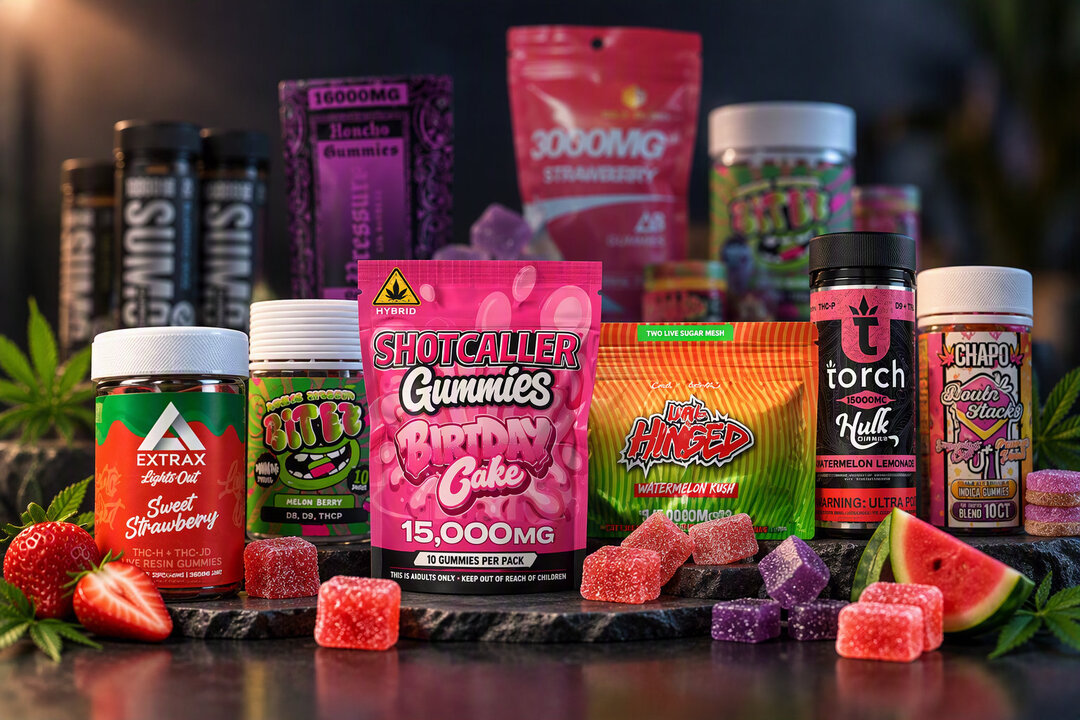
Which products are affected?
We've grouped the products whose federal status is changing in one place, so you can see what's affected before the deadline. Some items, such as lab-made cannabinoids, may lose federal hemp status as early as November 12. Buy only what you plan to use, check your state's law, and remember these products are for adults 21 and over.
See products with uncertain future availabilityWant your voice in the decision?
Congress and the NC General Assembly both have decisions to make before December 11. If you'd rather see hemp regulated with age limits, testing and clear labels than banned outright, tell your lawmakers. Find your U.S. senators and representative at congress.gov, and your North Carolina legislators at ncleg.gov. A short, polite message about how hemp products fit into your life carries weight.
Hemp Products After December 11 FAQs
1. Can I keep hemp THC products I bought before December 11?
Federal law doesn't include an exception for products bought before the deadline. From December 11, 2026, products over 0.4 mg of total THC per container no longer qualify as hemp, and UNC School of Government analysis says possessing them will violate federal law. No federal agency has published guidance on enforcement against consumers.
2. Is it illegal to possess Delta-8 or THCA after December 11?
Under federal law, products that no longer meet the hemp definition are treated as marijuana, a Schedule I controlled substance. That includes typical THCA flower and THC products over the 0.4 mg per-container cap. State law may differ, and Congress could still change the dates.
3. Is there a grace period for hemp products after the ban?
No. Section 781 doesn't include a grace period or grandfather clause for products bought before December 11, 2026. The year between the law's passage in November 2025 and its effective date was the transition period.
4. What is the federal penalty for possessing marijuana?
Under 21 U.S.C. § 844, simple possession of a controlled substance carries up to 1 year in prison and a minimum $1,000 fine for a first offense. Those are the statutory limits; how federal agencies will handle hemp products after December 11 hasn't been announced.
5. Will CBD still be legal to own after December 11?
THC-free CBD products remain hemp under the new definition. Full-spectrum CBD products with more than 0.4 mg of total THC per container would not qualify, unless Congress changes the law.
6. Can I mail or travel with hemp THC products after the ban?
It's riskier. The U.S. Postal Service allows hemp in the mail only when it complies with federal law, and products over the new limits won't. Crossing state lines also brings other states' laws into play.
7. Will hemp THC products show up on a drug test?
They can. Standard drug tests look for THC metabolites and generally can't tell hemp-derived THC from marijuana. Some full-spectrum CBD products contain trace THC too. If you're subject to drug testing, avoid THC products.
8. Will hemp THC products still be legal in North Carolina after December 11?
Under current NC law, products that meet the 0.3% delta-9 THC standard remain hemp, because the state's definition doesn't follow the federal change. Federal law still applies in North Carolina, though, and state lawmakers could still act on HB 328.
Sources
- Public Law 119-37, Section 781 (GovInfo)
- 21 U.S.C. § 844: Penalties for simple possession (Cornell Legal Information Institute)
- Winter 2026 Cannabis Update (Phil Dixon Jr., UNC School of Government, Jan 2026)
- Impending federal hemp ban puts North Carolina's industry at risk (Port City Daily, Dec 2, 2025)
- The redefinition of "hemp" under federal law (Frier Levitt)
- Federal hemp changes (Minnesota Office of Cannabis Management)
- Congress approves one-month delay of federal hemp THC restrictions (Akerman LLP, Sept 2, 2026)
- Congress extends government funding through December (NCUIH, Sept 10, 2026)
- Session Law 2022-32: North Carolina hemp definition (NC General Assembly)
Update log
- October 31, 2026: Published. No federal enforcement guidance for consumers has been issued; December 11 and November 12 dates stand.
This article summarizes federal and North Carolina law for general information only and is not legal advice. Laws, deadlines and enforcement policies can change; consult an attorney about your situation. These statements have not been evaluated by the FDA. THC is intoxicating; do not drive or operate machinery after use. Hemp-derived products are for adults 21 and over.