

Last updated: October 30, 2026 · This page tracks the federal hemp deadline and will be updated as Congress acts. Facts checked against the enacted law, congressional votes and reporting from legal and news sources.
Quick answer: will the hemp ban be delayed again?
Nobody knows yet, and nothing has passed. As of October 30, 2026, the federal hemp changes still take effect on December 11, 2026. Products made with cannabinoids the plant can't naturally produce lose hemp status earlier, on November 12.
Only Congress can change those dates, because they're written into federal law. The most likely vehicle is the next government funding bill: the current stopgap funding law also runs out on December 11, so Congress has to pass something by then anyway.
Several bills would delay or replace the ban, but none had moved forward as of October 27. A White House official reportedly told senators in August there would be no further extensions, and 35 state attorneys general have urged Congress not to delay again.
Where Things Stand Right Now
In November 2025, Congress rewrote the federal definition of hemp in Section 781 of the funding law that ended the government shutdown (P.L. 119-37). The changes were set to start November 12, 2026. They move hemp to a total THC standard, cap finished products at 0.4 mg of total THC per container, and exclude cannabinoids made synthetically.
In September 2026, a stopgap funding bill, H.R. 6500, pushed most of those changes back by about a month. The Senate passed it 90-6 on August 8, the House passed it 370-48 on September 1, and the President signed it on September 2. It delayed most of Section 781 to December 11 but left one piece on the original date:
| Date | What takes effect |
|---|---|
| November 12, 2026 | Products containing cannabinoids "not capable of being naturally produced" by the cannabis plant lose federal hemp status |
| December 11, 2026 | The rest of Section 781: the total THC standard and the 0.4 mg per-container cap for finished products |
| December 11, 2026 | Government funding under H.R. 6500 runs out |
For a full breakdown of what changes on each date, see our plain-English guide to the federal hemp ban.
What Would Have to Happen for Another Delay
The effective dates are set by statute. That means the FDA, the DEA or the President can't move them on their own. A new delay needs a bill that passes both the House and the Senate and is signed before the deadline. There are four realistic paths:
Another delay inside the December funding bill
This is how the last delay happened. Because government funding also expires December 11, Congress must pass a new funding bill (another stopgap or a full-year package) by then to avoid a shutdown. Lawmakers could add another hemp delay to it, as they did in September. Nothing guarantees that: the provision would have to survive negotiations in both chambers.
A standalone delay bill
In January 2026, Reps. Angie Craig (D-MN) and Jim Baird (R-IN) introduced the Hemp Planting Predictability Act, which would push the restrictions back to 2028. A Senate version was also filed. Rep. James Comer (R-KY) has circulated a proposal that would delay the ban and add packaging, testing and age rules. None of these had advanced as of late October.
A bill that regulates hemp instead of banning it
Several bills would replace the ban with a regulated market:
- The HEMP Act from Reps. Morgan Griffith (R-VA) and Marc Veasey (D-TX), which would keep hemp products legal with new market rules.
- The Lawful Hemp Protection Act from Reps. Andy Barr (R-KY) and Angie Craig, introduced in July, covering manufacturing, testing, labeling, a 21+ age limit and synthetic cannabinoids.
- A bill from Rep. Beth Van Duyne (R-TX) that would keep hemp THC drinks legal and tax and regulate them like alcohol.
According to Marijuana Moment on October 27, none of these proposals had gained traction with congressional leaders.
A budget reconciliation bill
On October 26, Rep. Griffith told Roll Call that hemp provisions could go into a budget reconciliation bill after the midterm elections, possibly "before the 11th of December." Reconciliation can pass the Senate with a simple majority, but provisions that don't directly affect spending, revenue or the debt limit can be challenged and removed. Griffith suggested pairing his bill with a hemp tax measure.
Why Another Delay Isn't Guaranteed
- A reported "no more extensions" promise. Marijuana Moment reported that White House legislative affairs director James Braid told Senate Republicans in August there would be no further extensions if the September delay passed. That was a private, secondhand account, not an official statement, and Braid was reportedly leaving the administration in September.
- State attorneys general. On August 4, a bipartisan group of 35 attorneys general asked Congress to "reject any effort to delay, repeal, suspend, or weaken" the hemp reforms.
- Opponents in Congress. North Carolina's Sen. Ted Budd (R-NC) offered an amendment in August to keep the ban on its November schedule. It was tabled 61-32. Rep. Griffith said Budd and Rep. Andy Harris (R-MD) "just want to stop" intoxicating hemp products.
- Very little time. Congress returns after the November 3 midterm elections, leaving roughly five weeks before December 11, with government funding to settle in the same window.
Why a Delay or Fix Is Still Possible
- The President has asked for a fix. President Trump pushed for the September delay and posted about the hemp issue: "Please get it done, and SOON." In April he said Congress should update the law so Americans can keep accessing full-spectrum CBD.
- The White House budget office wants changes. In June, OMB said the administration "welcomes the opportunity to work with the Congress to, at a minimum, update the statutory definition" of final hemp-derived cannabinoid products to protect full-spectrum CBD.
- Large majorities backed the last delay. The September bill passed 90-6 in the Senate and 370-48 in the House, although those votes were mainly about keeping the government funded.
- There's a must-pass bill on the same date. The December funding deadline gives lawmakers a ready vehicle, just as in September.
What about November 12?
The September delay didn't cover cannabinoids that can't be naturally produced by the plant. Congress returns from the midterms only days before November 12, so plan as if that date holds. Whether converted Delta-8 falls under the November or December date is disputed; see our Delta-8 November 12 explainer.
Key Dates to Watch
| Date | Event |
|---|---|
| November 3 | Midterm elections. Congress returns afterward for the lame-duck session. |
| November 12 | Federal hemp status ends for cannabinoids not naturally produced by the plant. |
| November 16 and 30 | Scheduled reconvene dates for the North Carolina General Assembly, which hasn't taken a final vote on the state hemp bill, HB 328. |
| December 11 | Federal funding expires and the rest of the hemp changes take effect, unless Congress acts. |
What This Means for You
Plan around the dates in the law today, not the hope of a delay. If Congress changes them, we'll update this page.
- Buy only what you'll use before the deadline. Section 781 has no grace period for products bought before December 11. Products over the new limits wouldn't count as hemp under federal law after that date.
- Know your product. Most THC gummies, vapes and THCA flower exceed the 0.4 mg per-container cap. Our 0.4 mg THC per container guide shows how the math works.
- Check state law too. State rules run on their own schedules. North Carolina's lawmakers could still act on HB 328.
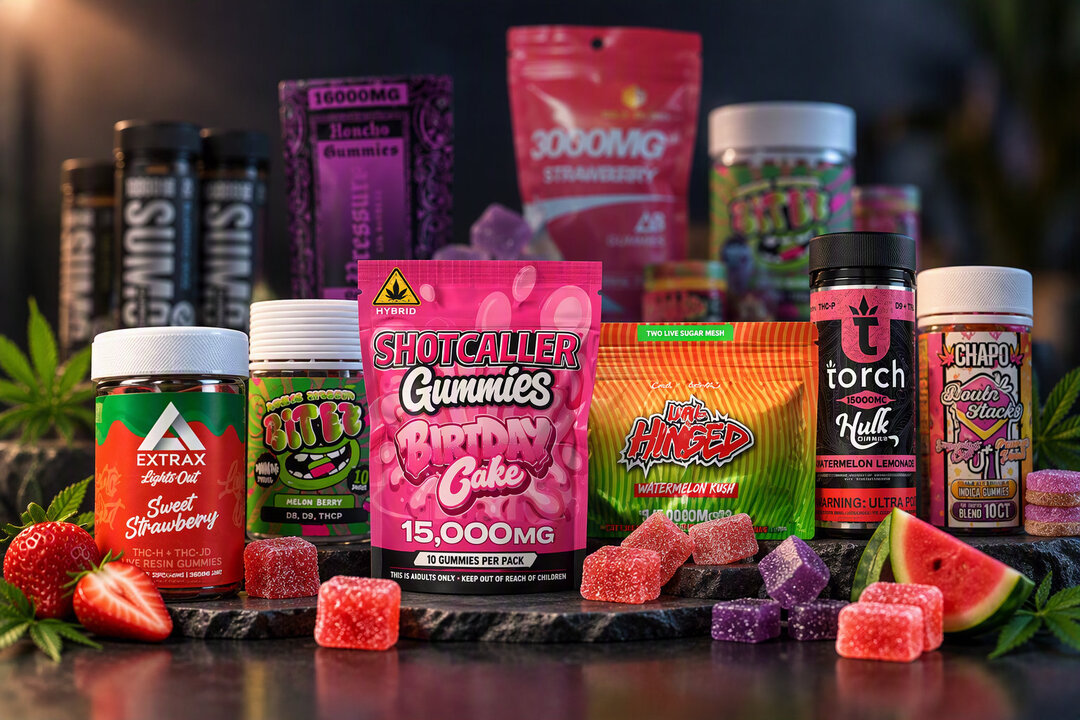
Which products are affected?
We've grouped the products whose federal status is changing in one place, so you can see what's affected before the deadline. Some items, such as lab-made cannabinoids, may lose federal hemp status as early as November 12. Buy only what you plan to use, check your state's law, and remember these products are for adults 21 and over.
See products with uncertain future availabilityWant your voice in the decision?
The next few weeks are when a delay or a regulation bill would be decided. If you'd rather see hemp regulated with age limits, testing and clear labels than banned outright, tell your lawmakers. Find your U.S. senators and representative at congress.gov, and your North Carolina legislators at ncleg.gov. A short, polite message about how hemp products fit into your life carries weight.
For how the state bill would work, see our North Carolina HB 328 explainer.
Hemp Ban Delay FAQs
1. Will the hemp ban be delayed again?
It's not known. As of October 30, 2026, no new delay has passed, and the federal changes still take effect December 11. Another delay would require Congress to pass a bill, most likely the December government funding bill, and the President to sign it.
2. When does the federal hemp ban take effect?
Most of the changes, including the total THC standard and the 0.4 mg per-container cap, take effect December 11, 2026. Products with cannabinoids that can't be naturally produced by the cannabis plant lose federal hemp status on November 12, 2026.
3. Why was the hemp ban delayed to December 11?
The delay was included in H.R. 6500, a stopgap funding bill that keeps the government funded through December 11, 2026. It passed the Senate 90-6 and the House 370-48, and was signed on September 2, 2026.
4. Can the President or FDA delay the hemp ban?
Not on their own. The effective dates are written into federal law, so changing them takes an act of Congress signed by the President.
5. What bills could stop or replace the hemp ban?
Pending proposals include the Hemp Planting Predictability Act (a delay to 2028), the HEMP Act from Reps. Griffith and Veasey, the Lawful Hemp Protection Act from Reps. Barr and Craig, and a hemp drinks bill from Rep. Van Duyne. None had advanced as of late October 2026.
6. Is November 12 still a deadline?
Yes, for products made with cannabinoids that can't be naturally produced by the cannabis plant. The September delay did not move that date.
7. Will hemp products show up on a drug test?
THC products can. Standard drug tests look for THC metabolites and generally can't tell hemp-derived THC from marijuana. Some full-spectrum CBD products contain trace THC too. If you're subject to drug testing, avoid THC products.
8. Are hemp THC products legal in North Carolina right now?
As of October 30, 2026, hemp-derived products that meet the 0.3% delta-9 THC dry-weight standard are legal for adults in North Carolina. The federal changes on November 12 and December 11 apply nationwide unless Congress acts, and state lawmakers could still act on HB 328.
Sources
- Congress should put hemp THC regulations into reconciliation bill, GOP lawmaker says (Marijuana Moment, Oct 27, 2026)
- Senate rejects amendment to keep hemp THC ban on track for November (Marijuana Moment, Aug 8, 2026)
- House passes bill to delay hemp THC product ban (Marijuana Moment, Sept 1, 2026)
- Congress approves one-month delay of federal hemp THC restrictions (Akerman LLP, Sept 2, 2026)
- Congressional Bill H.R. 6500 signed into law (The White House)
- Congress extends government funding through December (NCUIH, Sept 10, 2026)
- Reps. Craig, Baird introduce bipartisan bill to delay changes to hemp regulations (Office of Rep. Angie Craig, Jan 13, 2026)
- Attorney General Clark joins 34 attorneys general urging Congress to preserve federal hemp reforms (Vermont Attorney General, Aug 4, 2026)
- The cannabis dates that matter before December 11 (High Times, Oct 27, 2026)
Update log
- October 30, 2026: Published. No new delay has passed; December 11 and November 12 dates stand.
This article summarizes federal law and pending legislation for general information only and is not legal advice. Laws and bills can change quickly; check official sources or consult an attorney for your situation. These statements have not been evaluated by the FDA. THC is intoxicating; do not drive or operate machinery after use. Hemp-derived products are for adults 21 and over.